It is 7 PM. The last deal is getting desked, the BDC has gone home, and a lead who filled out a form ninety seconds ago is already texting two other stores. Nobody dropped the ball on purpose. There just were not enough hands at the exact moment a shopper decided to reach out.
That gap, between when a customer wants an answer and when a person is free to give one, is where most lost deals actually live. It is not a pricing problem or an inventory problem. It is a speed and coverage problem, and it shows up everywhere. The internet lead that waited four hours for a reply. The service call that rolled to voicemail during the lunch rush. The follow-up that stopped after the third text because the salesperson got pulled onto the floor.
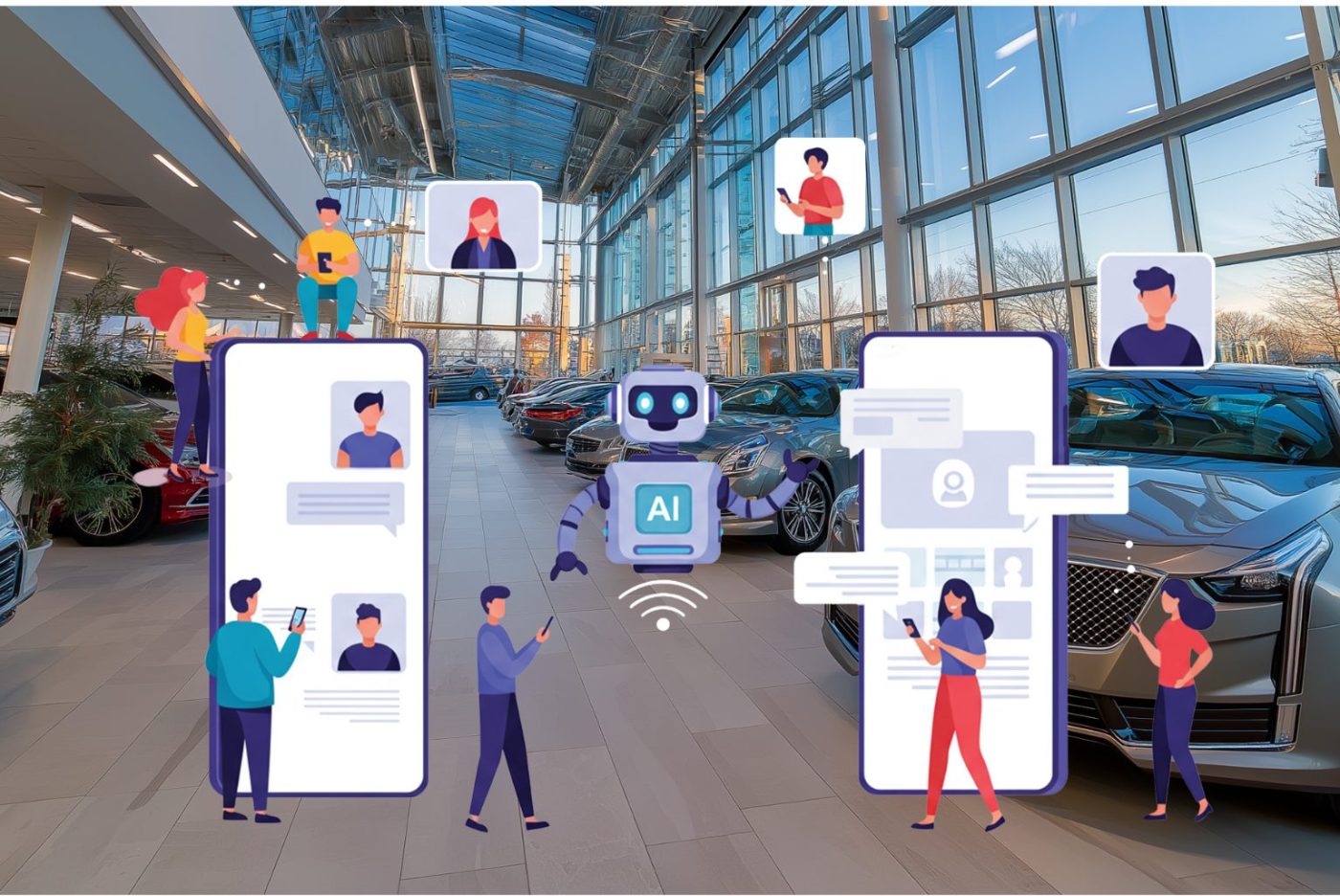
Matador built five AI agents to close that gap. Not one all-purpose tool bolted onto the website, but five specialized agents, each shaped around a distinct part of the store’s day. More than 1,500 dealerships already run them. This article introduces the agents the way they actually work, through the problem each one solves, and shows how they hand off to one another and, just as importantly, when they hand off to your team.
What does a dealership AI agent do?
An AI agent holds a real conversation, makes decisions based on live information, and takes action toward a goal without a human scripting each step. A scripted tool follows a decision tree: if the customer clicks this, show that. An agent works more like a strong BDC rep. It reads what the customer actually asked, checks the relevant data (your live inventory, or the service calendar), decides the useful next move, and makes it.
That difference matters on your floor because customers do not ask tidy questions. They ask “is the silver one still available and what is my payment with five down,” and they ask it at 11:40 PM. A scripted tool stalls there. An agent carries it to an outcome, because it is working from the same information your team would reach for.
Why dealerships need more than one type of AI
Here is the trap most single-tool AI falls into. The skills that make an agent great at one job make it mediocre at another.
The agent that fires a perfect first message to a fresh internet lead in seconds is built for speed and personalization at the top of the funnel. That is a different discipline from reviving a lead who went quiet three weeks ago, which is really a patience and timing problem. And both are different again from answering the phone, which has to handle voice in real time, route a call to the right person, and pull up the service calendar mid-sentence.
Ask one agent to do all of it and you get a generalist that is fine everywhere and excellent nowhere. Stores have felt this disconnect with older tools. The chat widget that captures leads but cannot follow up. The texting tool that cannot answer the phone. The work is genuinely different, so the agents should be too.
Matador specializes in dealerships and was built by people who lived on the sales floor for decades. Five agents, each tuned for its stage, each aware of the others, sharing one view of the customer so the handoffs feel like a single conversation instead of five tools taking turns.
An introduction to Matador’s five agents
AI Engage is the first responder. The moment a new lead lands, from a third-party listing, your site, a campaign, Engage opens with a message built from the lead’s source and intent. A trade-in inquiry gets a different opener than a specific vehicle question. The point is a personal, relevant first touch while the customer is still holding their phone.
AI Reply carries the live conversation. Once the customer answers, Reply runs the back-and-forth. It quotes real prices from your inventory, answers questions about specific units, and works toward a booked appointment. If the exact car just sold, Reply does not dead-end. It recommends comparable alternatives and keeps the thread moving. It runs around the clock and steps aside the instant a salesperson jumps in.
AI Follow-Up is the long game. Most leads do not buy on the first exchange, and most follow-up dies from fatigue. Follow-Up keeps working a lead for up to 180 days, and it does not send generic check-ins. It waits for a real reason, a price drop or a new arrival that matches what the customer wanted, and re-engages with that specific hook.
Call AI answers the phone. It is a set of voice agents behind one system. A receptionist that understands why someone called from how they say it and transfers with context attached. A sales specialist that pulls live inventory and books appointments. A service scheduler that finds a slot and reserves a loaner. A voicemail agent that captures the essentials after hours so your team calls back prepared. Every call writes a transcript, summary, and outcome into the CRM before the caller hangs up.
Chat AI works your website. It engages visitors while they browse, answers pricing and availability from live inventory, reads intent, captures the lead, and routes real shoppers toward a test drive or a salesperson, usually within a couple of minutes of them landing on the page.
The dealership challenge each agent addresses
It is easier to see why there are five when you line each one up against the specific problem it solves.
Speed to lead is Engage’s job. The odds of connecting fall off a cliff after the first few minutes, and most stores cannot reliably hit that window with staff alone, especially nights and weekends. Engage removes the wait.
Conversation drop-off is what Reply handles. A fast first message is worth nothing if the customer’s 10 PM reply sits until morning. Reply keeps momentum by running the substantive middle of the conversation, the pricing, the “is it still available,” the scheduling, whenever it happens.
Lead decay is Follow-Up’s territory. The average store sits on a mountain of leads that were never actually lost, just set down after a few unanswered texts. Working them for months, with real reasons to return, recovers deals that would otherwise quietly expire.
The phones are Call AI’s reason for being. Roughly 40% of dealership calls happen after hours, and 73% of callers who reach voicemail never leave a message. Phones do not stop ringing when the BDC is at lunch or the service drive is buried. Call AI makes sure someone picks up with the right answer.
Website abandonment is Chat AI’s problem. Most site visitors leave without identifying themselves. Chat AI turns anonymous browsing into a named lead and a scheduled visit before the tab closes.
How the agents work together
The agents are specialized, but to the customer it should feel like one conversation. That is the whole point of building them on a shared foundation.
A typical lead moves through several of them without ever sensing a seam. Engage opens it, Reply carries it to an appointment, and if the customer goes cold, Follow-Up takes it from there, each agent working from the same history so the customer never repeats themselves. A phone call handled by Call AI becomes a CRM record Follow-Up can act on later. A website chat Chat AI captures flows into the same inbox where Reply and a human rep continue it. And the handoffs carry context. When Reply steps back for a live salesperson, or the receptionist agent transfers a call, whoever picks up already knows what the customer wants.
That shared context is what separates five coordinated agents from five disconnected tools that happen to share a logo. The customer gets continuity. Your team gets a clean, documented pipeline instead of five inboxes.
When the dealership team takes over
None of this replaces your people, and the design makes that explicit. The agents are built to know when to get out of the way.
The clearest example is AI Reply, which steps back the moment a human joins the thread. When a salesperson decides to jump in, the agent yields. No talking over your staff, no double-messaging.
The agents handle the parts that reward speed, availability, and consistency. The instant first reply. The after-hours booking. The fifth follow-up nobody had time for. Your team handles the parts that reward judgment and relationship. The negotiation, the read on a hesitant buyer, the close. Because every interaction is logged with a transcript and summary, the salesperson taking over is better informed than they would be picking up a cold lead, not less. The handoff is a promotion of the conversation, not a reset.
Real Dealer Results:
Rosen Automotive Group is a strong example of what that can look like in practice. After implementing Matador, the group did not replace its BDC staff with AI. It hired additional people while seeing conversion rates at some locations climb from roughly 10% to nearly 50%. The technology created more capacity for the team to work opportunities effectively, helping the dealership generate more value from its existing staff while creating room to grow the team alongside the business.
That is the goal of dealership AI at its best: not fewer people, but better leverage for the people you already have and more opportunity for the business they support.
How Matador maintains dealership-specific rules and processes
Matador’s agents work from your live data, a history of billions of customer conversations, and your defined rules, not a generic script. Prices come from your actual inventory, so an agent is never quoting numbers that do not exist. Service scheduling plugs into the tools you already run, so the slots it offers are real. You can shape how the agents present themselves, including naming a voice agent and setting its style, and you can define separate behavior for business hours and after hours. And because Matador integrates with numerous dealership systems, the conversations and appointments the agents create land in the CRM and scheduling tools your team already lives in, not a separate silo someone has to remember to check.
The result is agents that behave like an extension of your specific store. Following your rules, quoting your prices, booking on your calendar. Not a one-size template stamped onto your website.
What dealerships should measure
The temptation with any new tool is to judge it by activity. Messages sent, calls answered. Those are inputs. The measures that actually tell you whether the agents are working sit closer to the money.
Start with speed to lead. Your average time to first response, and what share of leads get that response inside the critical first few minutes, around the clock. This is the number the agents move most directly, and it is often invisible until you measure it. Then look at engagement, the rate at which leads actually reply and stay in a conversation.
Real Dealer Results:
Over a one month period, Fowler Toyota of Norman, reached a 73% overall engagement rate and saw 156 of 291 appointments influenced by AI, including 15 set after hours.
Numbers like that only happen when the conversation stays alive.
From there, move down the funnel to the outcomes a GM cares about. Appointments set, show rate, and units sold that touched an agent along the way. Show rate is worth watching closely, since automated confirmations and reminders are built to lift it. On the phones, track call answer rate and after-hours capture, conversations that would simply have been lost before. On the service side, watch appointments and loaner bookings the agents handled without staff time.
Two more are easy to overlook. Revived-lead revenue, the deals closed from leads that had gone dormant, which Follow-Up is built to produce and which is close to found money. And staff time reclaimed, the hours your BDC and service team get back when repetitive first-touch and follow-up work is handled for them. That is time they can put toward the conversations only a person can have.
Real Dealer Results:
Tim Short Auto Group went from 40 appointments a month to 400.
Jim Ellis Automotive Group doubled its close rate.
Valley Kia Fontana grew sales by 50%.
Different stores, different starting points, same pattern: more from the opportunities they already had.
How to determine which agents a dealership needs
The real opportunity with dealership AI is not automating everything. It is deciding which moments should happen faster, which conversations should never be allowed to go cold, and where your people can create the most value.
That is why Matador’s five agents are built around different jobs instead of asking one piece of AI to do everything. Engage responds when interest is highest. Reply keeps the conversation moving. Follow-Up stays with opportunities over time. Call AI makes sure the phone gets answered. Chat AI turns website traffic into conversations. And because they share context and know when to hand the customer to your team, the experience feels connected instead of automated for automation’s sake.
For most dealerships, the right place to start is not with all five. Start with the point in your process where customers are most likely to wait, disappear, or get overlooked. Fix that gap first, measure what changes, and build from there. The goal is simple: give every opportunity a better chance to become a conversation, an appointment, and ultimately a customer, while giving your team more time for the work only they can do.
Want to see where Matador’s AI agents could fit into your dealership? Book a demo and we’ll walk through your current process together.