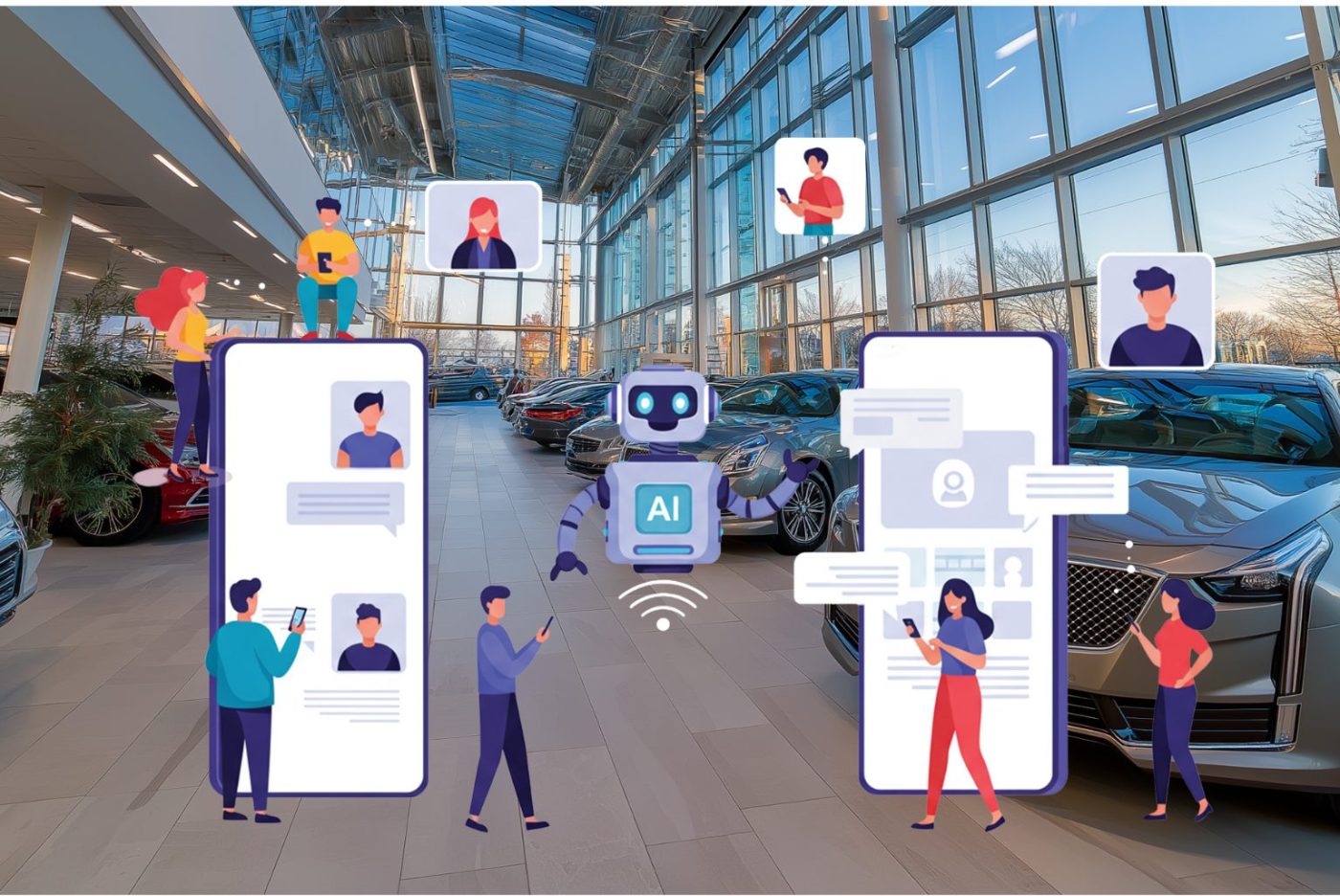
By 8:30PM the showroom has quieted down, most of the sales team has gone home, and a customer who has spent the last hour comparing three SUVs finally submits a lead on one of yours. They want to know whether it is still available, what their trade might be worth, and whether they can come in tomorrow afternoon. By the time someone at the store sees the lead the next morning, the customer may already be several conversations deep with another dealership.
Nobody failed to do their job. The customer simply decided to shop when the dealership did not have someone available to respond.
This is where AI is becoming useful in automotive retail. Not as a replacement for the people who sell cars, build relationships, solve problems, and manage customers through complicated decisions, but as another layer of capacity around the repetitive, time-sensitive work that dealerships struggle to cover consistently.
Dealership AI is moving beyond simple automations and scripted website tools toward AI agents that can understand a customer, make decisions based on the conversation, and take action toward an outcome.
What AI means in a dealership environment
Strip away the terminology and dealership AI is software that can understand customer language, use relevant information, or take action based on what is happening in the conversation.
A customer rarely follows the neat path a traditional workflow expects. They might start by asking whether a vehicle is available, then mention a trade, ask about financing, change their preferred appointment time, and bring up a completely different vehicle halfway through the conversation. A system that only follows predetermined rules has a hard time adjusting because every next step has to be anticipated in advance.
Modern AI can interpret those changes as they happen. This is what makes AI useful inside a dealership rather than simply interesting technology. The job is to help a customer get an answer, keep a conversation moving, and give the dealership a better chance to turn that conversation into a useful next step.
The difference between automation, AI, and agentic AI
Automation works from predetermined instructions. When something happens, the system performs the action it was configured to perform. A new lead arrives and a message goes out. Three days pass without a response and another message is triggered. An appointment is scheduled and a reminder is sent the day before. Dealerships have relied on this kind of technology for years because it is dependable and useful for processes where the next step is already known.
The limitation is that automation does not understand why something happened. A sequence can know that a customer replied, but a basic rules-based system does not necessarily understand whether that reply means the customer wants to reschedule, is asking about another vehicle, has already purchased somewhere else, or is ready to come in today.
AI adds that layer of understanding. It can read what the customer said, identify intent, interpret the context of the conversation, and generate a relevant response instead of simply choosing the next predetermined message.
Agentic AI takes the next step by using that understanding to work toward a goal. If the objective is to move an interested customer toward an appointment, an AI agent can answer questions, use dealership information, continue the conversation, identify the appropriate next step, help schedule the visit, and keep the dealership’s systems updated as the interaction develops.
The difference becomes much clearer when you compare it to the way a strong dealership employee works. A BDC representative does not simply send message number three because three days have passed. They read what the customer said, understand where the conversation stands, decide what would be useful next, and adjust. Agentic AI is designed around that same idea: understand the situation first, then act.
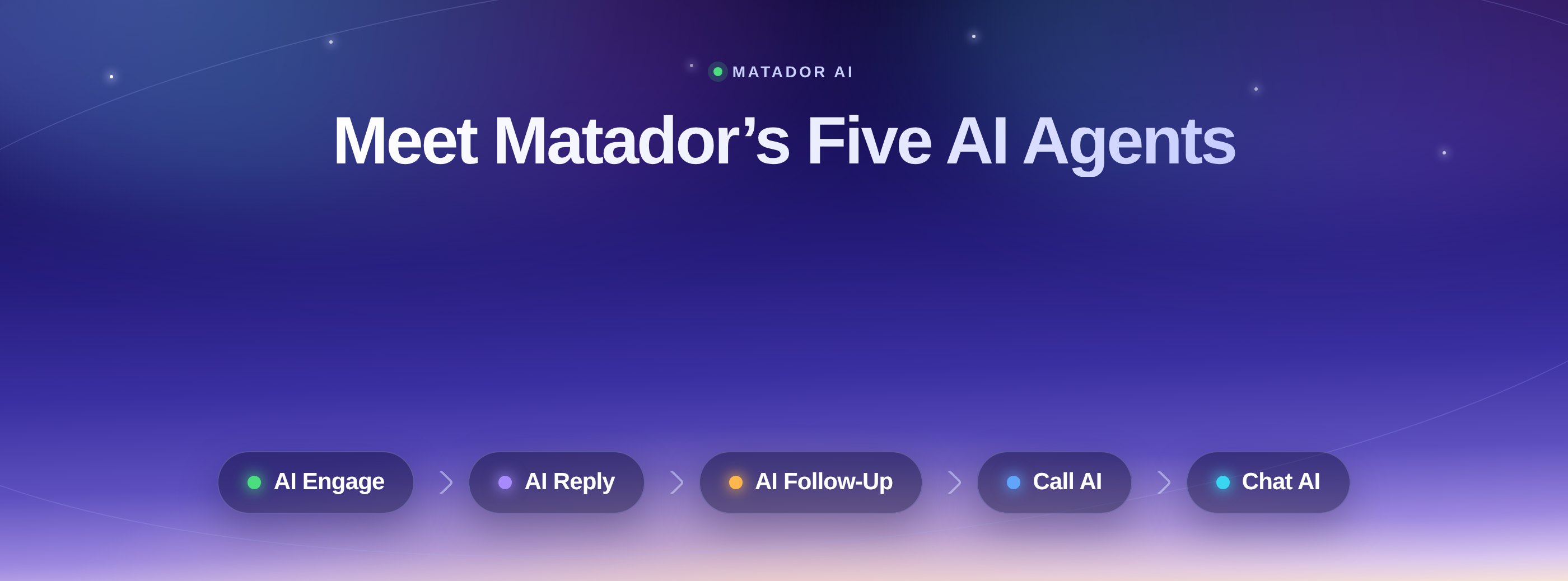
Matador’s platform is built around this agentic model, with different AI agents designed for the distinct conversations dealerships handle across the customer journey rather than one general tool trying to treat every interaction the same way.
Why dealership AI is growing now
The work dealerships need to do has not suddenly changed, but the volume and timing of customer communication has.
Customers research vehicles on their own schedule. They shop late at night, during lunch, on weekends, and while the dealership is closed. They move between websites, third-party marketplaces, text, email, chat, and the phone without thinking about which department or system is supposed to handle each interaction. They also compare stores quickly, which puts more pressure on dealerships to respond while the customer’s interest is still high.
The dealership team is working within a very different set of constraints. Salespeople are handling showroom customers, deliveries, phone calls, follow-up, CRM tasks, and new internet opportunities at the same time. BDC teams can only manage so many active conversations before something gets pushed down the list. Service advisors are balancing customers in the drive with inbound calls, appointments, status questions, scheduling changes, and follow-up from previous visits.
This is why the value of AI is closely tied to capacity. It can cover the moments that are difficult for staff to cover perfectly every time, especially when the work rewards speed, persistence, and consistency more than judgment.
Industry adoption reflects that shift. A Q1 2026 study from Reynolds and Reynolds found that 57% of dealership personnel reported using AI in some capacity, increasing to 70% among executives and dealer principals. AI has moved well beyond a small group of experimental stores and into regular dealership operations.
The underlying technology has also improved enough to support more complicated work. Earlier tools could trigger an email or move a customer through a scripted decision tree. Modern AI can understand natural language, maintain context across several messages, and increasingly complete multi-step tasks. That is what opens the door to applications across sales, service, voice, chat, follow-up, and customer communication.
How AI supports dealership sales
The first few minutes after a lead arrives are one of the most obvious places for AI to create value because the customer has already demonstrated intent. They have submitted a form, asked about a vehicle, requested a trade value, completed a finance application, or responded to a campaign.
The challenge is responding while that interest is still active. Even during normal business hours, a high-volume dealership can have several new opportunities arrive at once.
An AI agent can respond as soon as the lead enters the process and use the source and context of that lead to shape the conversation. Someone asking about a trade does not need the same first message as someone asking whether a specific vehicle is still available. That first interaction becomes more useful when it acknowledges what the customer actually did instead of simply confirming that the dealership received their information.
The work continues after the first reply. Customers ask about pricing, inventory, appointments, availability, trades, financing, and alternatives. They change their minds, disappear for several hours, come back the next day, and ask another question. AI can help carry that middle portion of the conversation so momentum does not depend entirely on whether an employee happens to be looking at the CRM when the next message arrives.
Matador separates these jobs across specialized agents. AI Engage focuses on the initial opportunity, while AI Reply handles the active conversation once the customer responds.
The opportunity sitting inside the CRM
Fresh leads naturally command attention because they are visible and urgent. The much larger opportunity is often the group of customers who already entered the dealership’s pipeline and never reached a final outcome.
The dealership already spent the money or effort required to create those opportunities sitting in their CRM. The difficulty is continuing to work them while new leads arrive every day.
Human follow-up naturally becomes selective because there is only so much time available. A salesperson can send another message to a customer who has ignored five attempts, or they can respond to the person who just asked whether they can come in today. The newer, more responsive opportunity usually wins, and that is a rational use of the salesperson’s time. It also means older leads steadily accumulate in the CRM.
AI Follow-Up is designed around that problem. Instead of expecting a salesperson to manually remember every dormant opportunity, an agent can continue working the customer over time and re-engage when there is a useful reason to return to the conversation. That could be a relevant vehicle arriving, a change connected to what the customer wanted, or another dealership-specific trigger that gives the message a purpose beyond asking whether they are still interested.
This is one of the more important applications of dealership AI because it changes how much value a store can recover from opportunities it already has. The CRM stops being only a record of what the team worked in the past and becomes a larger pool of conversations that can continue when the timing is right.
How AI supports the service department
Fixed operations presents the same capacity problem in a different form.
AI can absorb the repetitive communication surrounding the service visit while the advisor focuses on the parts of the job where their experience matters. That includes helping customers schedule or reschedule appointments, answering routine questions, sending reminders and confirmations, following up on maintenance opportunities, and supporting communication around previous recommendations.
Call AI also changes what happens when a customer calls at a bad time. Instead of requiring every caller to wait until the right employee is available, an AI agent can understand why the person is calling and help with the next step.
The goal is to reduce the amount of advisor time spent on repetitive coordination so the customer standing in the drive, the complicated repair conversation, and the situations that require judgment receive more attention.
What AI changes about the dealership phone
The phone has always exposed the difference between customer demand and staff availability because calls arrive when they arrive. They do not care whether the BDC is at lunch, the sales floor is packed, or the service drive has six customers waiting.
That becomes particularly visible after hours. Roughly 40% of dealership calls happen outside normal operating hours, and 73% of callers who reach voicemail do not leave a message. A caller who never leaves their information is difficult to recover because the dealership may not even know what opportunity was lost.
Call AI is built to give the phone the same type of coverage AI provides to digital conversations. Instead of forcing the customer through a rigid phone tree, a voice agent can understand what the caller is asking from the conversation itself. Sales conversations can use live inventory information and move toward an appointment. Service conversations can access scheduling. Calls can be transferred when a person is needed, with the purpose of the call already understood.
Turning website traffic into actual conversations
Dealerships invest heavily in getting customers to their websites, but a large share of those visitors browse inventory and leave without ever identifying themselves.
A traditional form asks the shopper to stop what they are doing, provide information, and wait for somebody to contact them later. Basic chat tools improved on that by creating another point of contact, but many still relied heavily on scripted paths that worked only as long as the customer’s question fit the script.
AI makes website chat more useful because the conversation can respond to what the shopper is actually doing.
Someone browsing a specific vehicle can ask about that vehicle. A customer comparing inventory can ask whether another option is available. A shopper showing clear buying intent can move toward an appointment or salesperson without having to abandon the conversation and start again somewhere else.
Matador’s Chat AI is built around that transition from anonymous website activity to an active dealership conversation. The value here is turning the traffic the dealership already generates into more identifiable opportunities and then connecting those opportunities to the rest of the dealership process.
Why the CRM matters so much
Effective CRM integration allows the AI and dealership team to work from the same customer history. With messages and outcomes logged, relevant information from previous conversations can inform the next interaction. Appointment activity can be connected to the record. When an employee joins the conversation, they can see what the customer asked and how far the interaction progressed instead of beginning from scratch.
Integration depth matters here. A vendor saying that it “integrates with your CRM” does not tell a dealer very much on its own. The useful questions are what information the system can read, what information it can write back, which actions it can take, how quickly updates appear, and what work the dealership still needs to perform manually.
A strong AI integration should make the CRM more useful, not create another place for the team to manage.
Dealership-specific rules matter
Matador’s AI does not start as a blank canvas that needs to be taught how to sell a car or communicate with a customer. It comes with automotive expertise, proven sales practices, and a clear goal already built in. The dealership’s role is to provide the information the AI could not know on its own: the specific rules, processes, preferences, and facts that make that store unique.
Think of it like onboarding an experienced salesperson who is new to your dealership. You would not teach them the basics of building rapport or moving a customer toward an appointment. You would teach them how your store operates. Maybe test drives are appointment-only on weekdays. Maybe your team uses specific terminology with customers, follows a particular scheduling process, or wants certain conversations handed off at a specific point.
That dealership-specific context is what allows the same underlying AI to operate differently from one store to the next. Instead of forcing the dealership to rebuild a process around the technology, Matador adapts to the way the dealership already does business while bringing the automotive knowledge needed to move conversations forward.
What AI should not be expected to do
The dealerships that get the most out of AI will still manage it. They will review performance, look at conversations, identify where customers are getting stuck, and adjust the system based on what the results show. AI can remove a large amount of repetitive work without removing the need for good dealership management.
AI is strongest where the work rewards availability, consistency, speed, memory, and repetition. Dealership employees remain strongest where the work requires judgment, persuasion, empathy, relationship-building, negotiation, and the ability to read a situation that does not fit neatly into a process.
When the dealership team takes over
The strongest dealership AI workflows are designed with a clear understanding that the customer will eventually reach a point where a person creates more value than the agent.
AI Reply provides a simple example. The agent can handle the immediate response, answer questions, continue the conversation, and help move the customer toward an appointment. When a salesperson enters the thread, the agent steps back. The employee does not need to compete with automated messages or wonder whether the system is going to continue talking over them.
The same principle applies across the dealership. AI can handle the customer who responds late at night, the repetitive appointment coordination, the fifth follow-up, or the routine service request. The salesperson or advisor takes over when judgment, negotiation, relationship, or a more complicated conversation becomes important.
The quality of the handoff matters as much as the timing. Every interaction before that point should give the employee more context. A salesperson taking over a customer conversation should know which vehicle they asked about, what questions have already been answered, whether they discussed a trade, and why they want to come in. A service advisor receiving a transferred call should know what the customer is trying to accomplish before starting the conversation again.
The AI handles the parts that are difficult to cover consistently at scale, and the dealership team enters with more information when the conversation reaches the point where their skills matter most.
Real Dealer Results
Rosen Automotive Group shows what that relationship can look like in practice. After implementing Matador, the group did not reduce its BDC staff. It added employees while conversion at some locations increased from roughly 10% to nearly 50%. AI created more capacity for the team to work opportunities effectively while the business continued to grow.
Why human oversight and optimization still matter
No dealership hires a salesperson, gives them access to the CRM, and assumes their performance will never need to be reviewed. AI should not be treated differently simply because more of the work is automated.
Review serves two purposes. The first is quality control. Dealership leaders need visibility into how the AI is representing the store, how it handles unusual customer questions, and whether the rules put in place are creating the experience the dealership intended.
The second is optimization. Over time, conversation data shows where customers respond, where they disengage, which follow-up approaches work, when employees are taking over, and where the process could be improved. That information can be used to refine messaging, timing, rules, campaigns, and handoffs.
This is an important distinction when evaluating providers. The work should not end when the technology goes live. A strong AI partner should be able to help the dealership understand what the system is producing and improve it as more real customer interactions take place.
Not all dealership AI is the same
Dealerships need to look beyond the terminology and evaluate what the technology can actually accomplish inside their process. The important questions are whether it understands customer intent, maintains context, uses live dealership information, follows up intelligently, integrates with the CRM, takes action, supports the communication channels the store relies on, and gives employees a clean way to step into the conversation.
It is also worth asking whether one tool is trying to do too many fundamentally different jobs.
Responding to a brand-new internet lead requires speed and immediate personalization. Reviving a customer who stopped responding three weeks ago is a timing and relevance problem. Answering the dealership phone requires real-time voice interaction and routing. Working an anonymous website visitor requires identifying intent before a formal lead even exists.
Matador approaches those as different jobs. AI Engage focuses on the first response, AI Reply handles the active conversation, AI Follow-Up continues working opportunities over time, Call AI handles voice, and Chat AI works website traffic. The agents share the broader customer context, but each is built around the part of the dealership process it is responsible for.
To the customer, the technology should still feel like one dealership conversation. The specialization exists behind the scenes so each part of that conversation can be handled well.
What dealerships should measure
AI performance should be judged by what moves through the dealership, not by how busy the software looks.
Messages sent, calls handled, and conversations generated can tell you how much activity is happening, but they do not tell you whether the dealership is creating more opportunity. The measures that matter become more useful as they move closer to the actual customer journey.
Speed to lead is a natural starting point because it shows how consistently the dealership can respond when a new opportunity appears. The useful measure is not only the average response time during staffed hours, but whether customers are receiving a relevant first response quickly across nights, weekends, busy periods, and every other time the team cannot guarantee immediate coverage.
Engagement comes next. A response only creates value if the customer continues the conversation. Dealerships should look at how many leads reply, how many conversations remain active, and how many customers that previously went quiet return to the pipeline.
Real Dealer Results
Over a one-month period, Fowler Toyota of Norman reached a 73% overall engagement rate and saw 156 of 291 appointments influenced by AI, including 15 appointments set after hours. Those results show the difference between measuring messages and measuring what happened because the conversation continued.
Dealerships should also measure the capacity AI gives back to employees. If first responses, routine scheduling, repetitive follow-up, and basic questions are being handled by agents, the team should have more time available for customers who are engaged and situations that require a person.
For dealer groups and OEMs, visibility across locations becomes even more important. Leadership needs to understand which rooftops are generating results, where engagement or appointment performance differs, and where AI is creating measurable wins across the organization. The technology should make performance easier to see, not create another black box inside the dealership.
What dealership AI looks like when it is working
The best version of dealership AI is not particularly dramatic from the customer’s perspective. Their question gets answered when they ask it. The conversation remembers what they already said. The appointment gets scheduled. A salesperson joins with the right context. The service customer reaches someone even when the advisor is busy. A shopper who went quiet hears back when there is a useful reason to reconnect.
Behind the scenes, much more has changed. The dealership has fewer opportunities waiting for someone to become available, fewer repetitive tasks competing for employee attention, better coverage outside normal working hours, and a larger portion of its existing CRM continuing to receive meaningful follow-up.
That is where agentic AI fits into automotive retail. It is not about automating every part of the dealership or trying to remove people from the customer journey. It is about understanding which parts of the process depend on speed, consistency, and persistence, then making sure those parts happen even when the team is occupied elsewhere.
For one store, the biggest gap may be the first response to an internet lead. Another may have thousands of older opportunities that are no longer receiving meaningful follow-up. A service department may be losing calls during its busiest hours, while another dealership may be generating significant website traffic that rarely turns into an identifiable customer.
Those are different operational problems, which is why the right AI strategy begins with the process rather than the technology. Identify where customers wait, where conversations stop, and where valuable employee time is being spent on work that does not require their judgment. That is where AI has the clearest role.
Matador’s five AI agents are built around those specific dealership moments. Together, they support the parts of the customer journey where opportunities are easiest to lose while giving dealership employees more time for the relationships, decisions, and conversations only they can handle.
Want to see where Matador’s AI agents could fit into your dealership? Book a demo and walk through your current process with our team.